Gengo, Rev, RushTranslate, DeepL Pro and TransPerfect cover most Spanish-to-English work: legal filings turn on a signed certification, medical files turn on a clinical reviewer, and video is billed per minute of runtime rather than per word.
How we compared
Four axes decide almost every Spanish-to-English purchase: price converted into one comparable unit, whether a qualified human signs a certificate of accuracy, how fast work moves when a filing deadline is days out, and whether the vendor handles timed media instead of flat text.
Price only becomes readable after conversion. Document shops quote per source word, subtitle and dubbing shops quote per minute of runtime, machine-translation tools quote per seat per month. A Spanish discharge summary and a 12-minute Spanish interview are different purchases even when the invoice totals match.
Human labor is not getting cheaper. Slator reported that the BLS median salary for interpreters and translators rose 5% in 2024 even as language-industry growth slowed — which may be one reason buyers are not seeing certified per-word pricing fall, though that is an inference rather than something the data shows.
What we checked, and what we did not
Checked: published rate cards and public product documentation as of October 2026, the federal regulation covering Spanish-language evidence filed with USCIS, and how each vendor’s unit of sale converts to per word, per minute or per seat.
Not checked: nothing was ordered, timed or graded. Turnaround promises were not stress-tested, enterprise contract pricing is not public, and quality on any marketplace depends on the individual linguist assigned to your job.
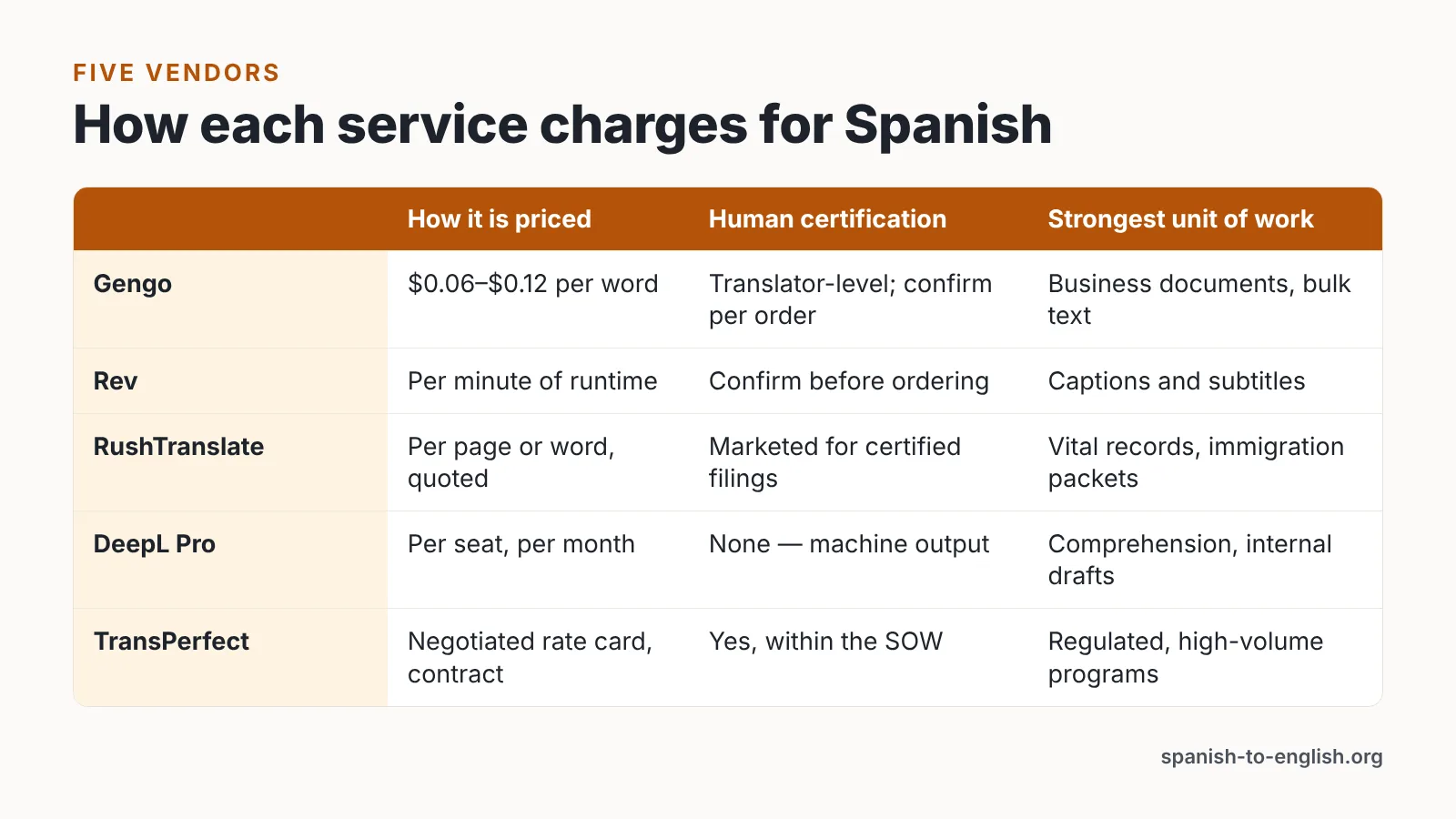
Only Gengo publishes a public rate card for Spanish to English; every other vendor here quotes. The column below therefore describes how each one charges, not what it will charge you.
| Service | Model | How it is priced | Human certification | Strongest unit of work |
|---|---|---|---|---|
| Gengo | Human translator marketplace | Published per-word rate card: $0.06/word Standard, $0.12/word Advanced (Gengo rate card) | Translator-level; confirm per order | Business documents, bulk text |
| Rev | Human media services | Per minute of runtime; no Rev figure cited here. Category benchmark only, not a Rev rate: Vendr’s procurement data puts Spanish subtitling plus captioning at $5–$8 per minute across vendors | Confirm before ordering | Captions and subtitles |
| RushTranslate | Certified document specialist | Per page or per word with certification included; quote-based — ask for the current rate card | Marketed for certified filings; read the certificate wording | Vital records, immigration packets |
| DeepL Pro | Machine translation subscription | Per seat, per month subscription; no public figure cited here | None — machine output | Comprehension, internal drafts |
| TransPerfect | Enterprise language services provider | Negotiated rate card by content type under contract | Yes, within the statement of work | Regulated, high-volume programs |
1. Gengo
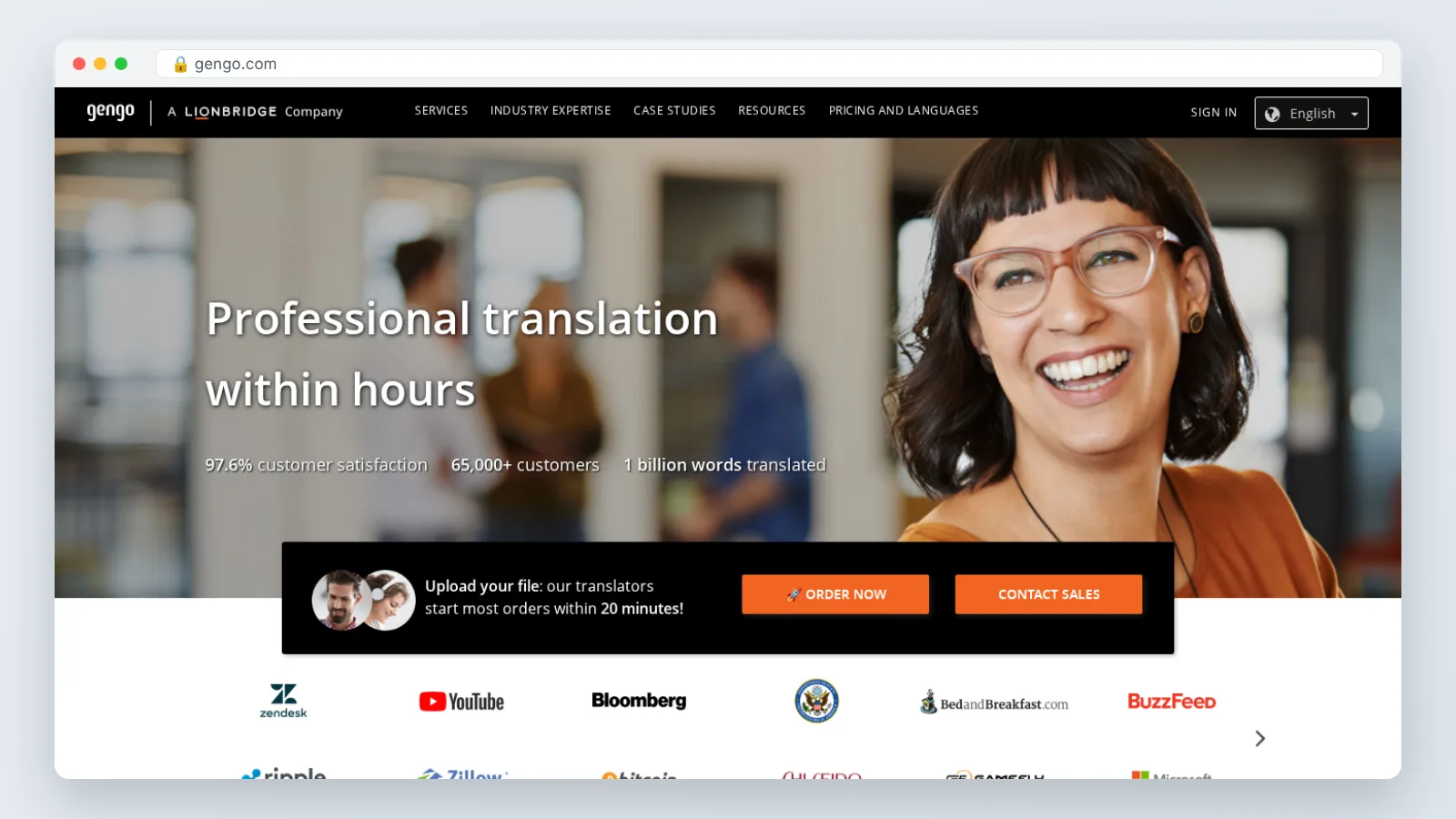
Gengo sells text translation through a marketplace of vetted freelancers, sorted into quality tiers you pick at checkout. You paste or upload the Spanish source, choose a tier, and the job routes to whoever claims it first.
Gengo’s published rates start at $0.06 per word for Standard and $0.12 per word for Advanced, the tier it recommends for formal business use. Do the arithmetic on your own files before you order: multiply actual source word count by the tier rate, because the gap between tiers becomes a real budget line on anything longer than a few pages.
The tier choice matters more than the headline rate. Standard suits internal comprehension and user-generated content where a clumsy sentence costs you nothing; Advanced is the floor for anything a customer or regulator reads.
Split long Spanish source files into logical chunks so one translator carries a consistent voice across related pages. Supply a short glossary of product names and job titles, because marketplace translators have no access to your internal wiki.
Best for: teams with steady volumes of ordinary business Spanish — support tickets, listings, marketing copy — who want a published price instead of a sales call.
Skip it if: your deliverable is a court exhibit, a clinical protocol or anything where one named linguist must own the file end to end.
2. Rev
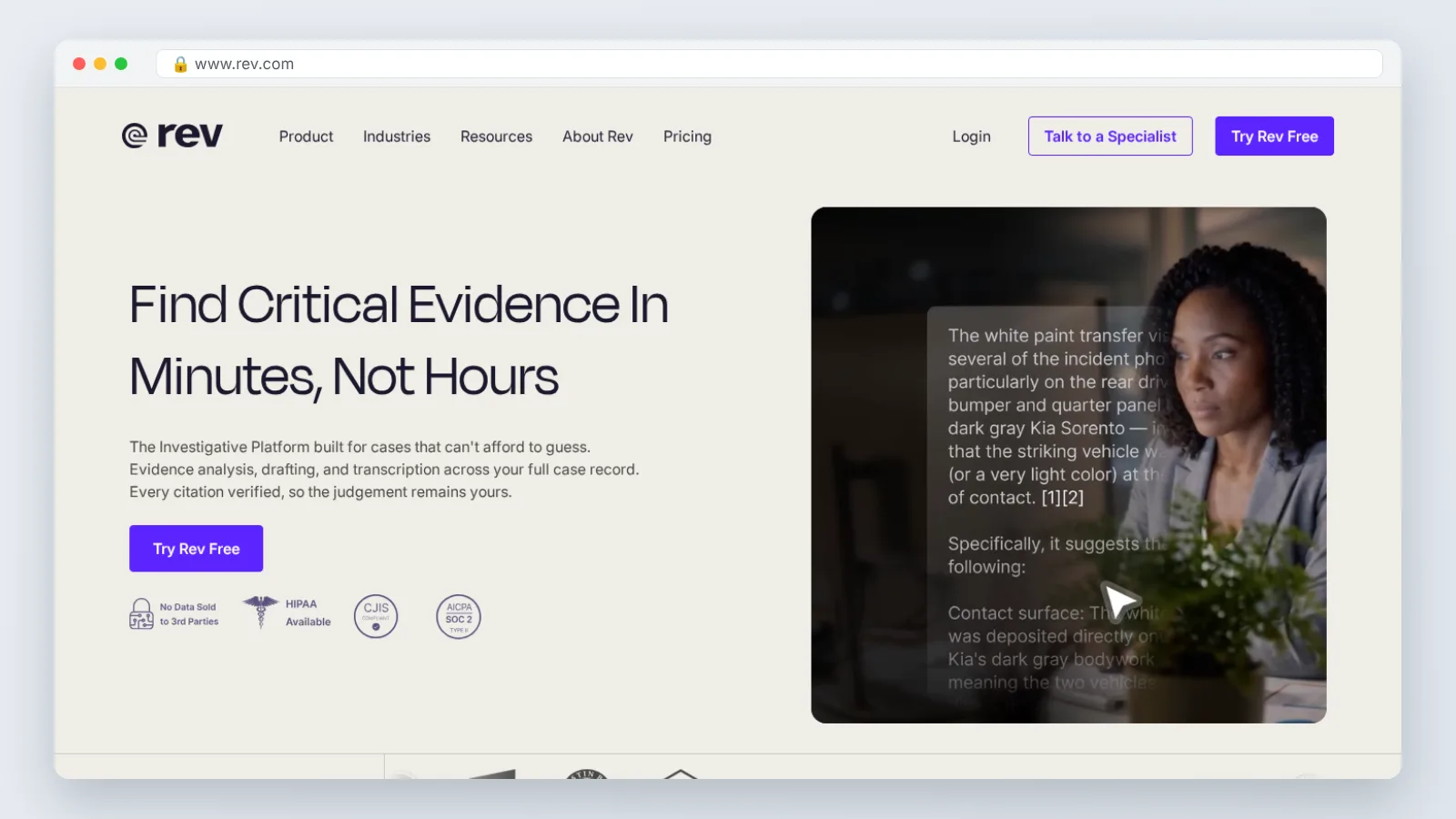
Rev is built around spoken-word work, so Spanish video and audio arrive as transcription plus translation plus a caption or subtitle file rather than a flat document. The unit is runtime, not word count, and that changes how you budget.
Procurement data compiled by Vendr shows Spanish is priced at the cheap end of subtitle work: translation plus captioning for Spanish typically runs $5–$8 per minute versus $10–$12 for rarer languages. That is a category benchmark across vendors, not Rev’s own published rate, so use the band as a sanity check on any media quote you receive.
Ask three questions before you approve a media order. Does the price include transcribing the Spanish source as well as translating it? Do you receive a sidecar file you can swap, or burned-in text you cannot edit? Who fixes timecode drift after a re-edit?
Spanish media adds work that text never does: overlapping speakers, regional slang, and numbers spoken fast. Flag those moments in your order notes with timestamps.
Best for: interviews, webinars, lecture recordings and social clips where English captions are the deliverable.
Skip it if: you need a stamped certificate for an immigration filing rather than a caption file.
3. RushTranslate
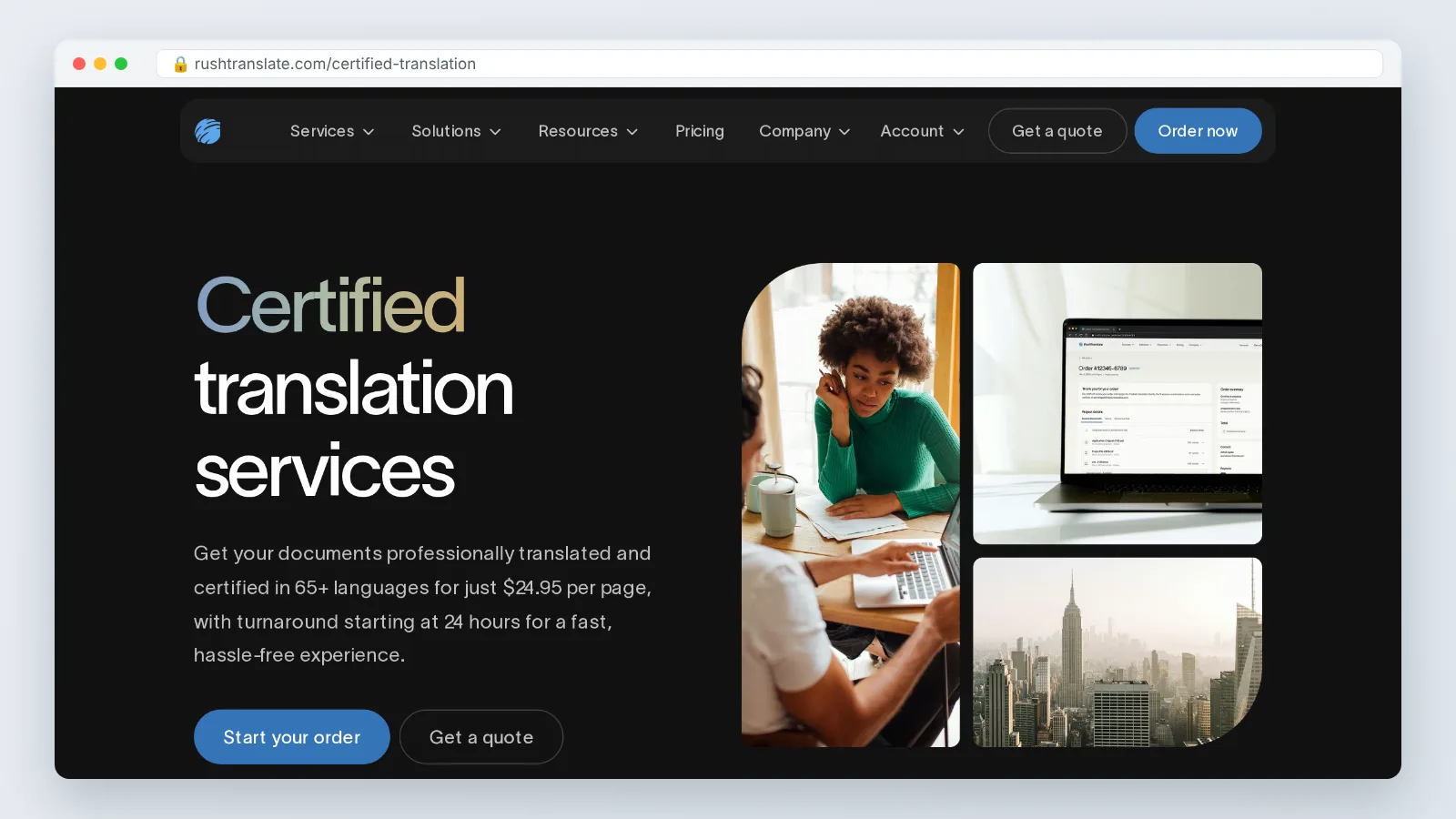
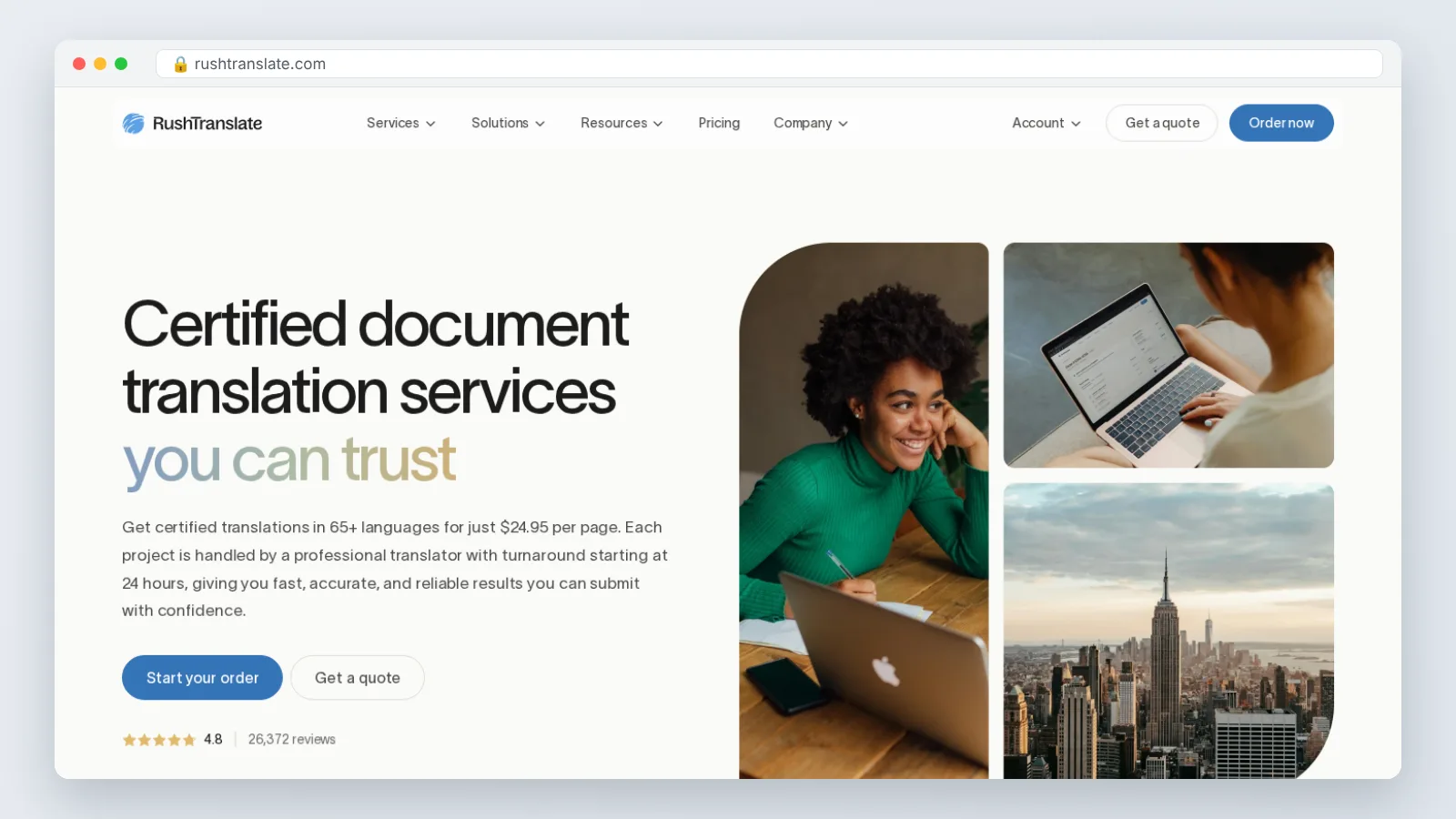
RushTranslate sits in the certified-document lane: birth certificates, marriage records, diplomas, police clearances — short files with heavy formatting and legal consequences. Pricing in this category is usually per page or per word with a certification included, so ask for the current rate card before you upload.
The legal requirement is specific. Under 8 CFR 103.2(b)(3), any Spanish-language document filed with USCIS must be accompanied by a full English translation plus a signed certification of accuracy and translator competency, as summarized by CitizenPath.
That rule shapes the deliverable. The translation must cover the whole document — seals, marginal notes, stamps, handwritten corrections — not just the fields an adjudicator cares about.
Scan quality decides turnaround. Photograph vital records flat, in daylight, with all four corners visible, because an illegible stamp becomes an "illegible" note in the English version and triggers questions later.
Best for: individuals and immigration attorneys filing a handful of Spanish vital records who need certification wording that matches the regulation.
Skip it if: you are translating a book-length run of marketing copy, where per-page certified pricing makes no economic sense.
4. DeepL Pro
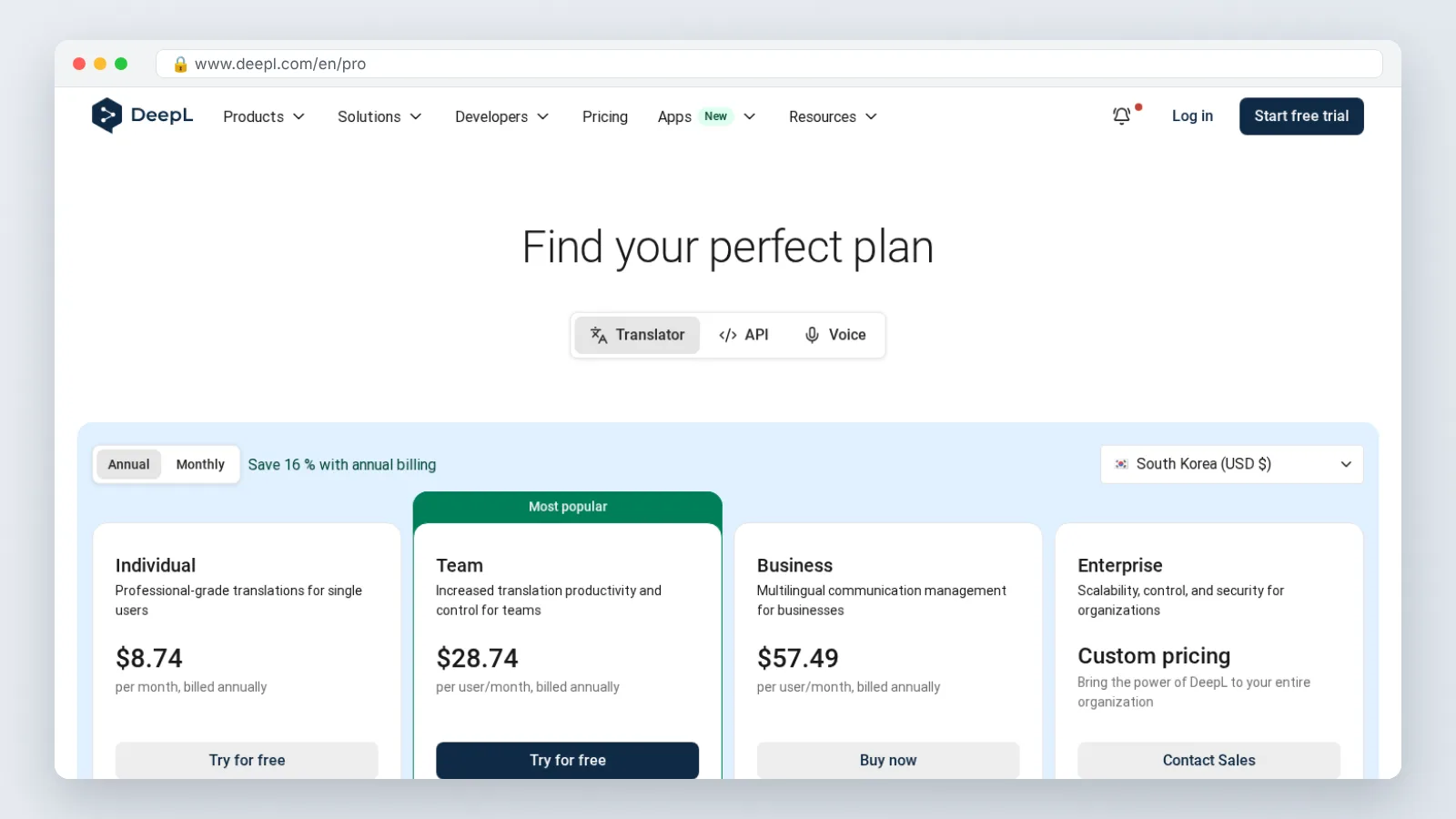
DeepL Pro is a machine-translation subscription sold per seat, so the economics flip: cost is fixed, volume is elastic. Divide the annual seat price by the number of Spanish documents your team actually pastes in each month, and the per-document figure either collapses or stays embarrassingly high.
It earns its keep on comprehension work. Reading a Spanish supplier email, triaging a long WhatsApp thread, getting the gist of a Mexican news article before you commission a human version — all fine.
The limits are categorical, not stylistic. Machine output has no signatory, so it cannot satisfy a certification requirement, and it flattens regional Spanish: Argentine voseo, Caribbean slang and Mexican regionalisms often land as neutral textbook English that loses the speaker’s register.
Use it as a first pass, then pay a human to post-edit anything external. Mark machine-drafted files clearly in your folder names so nobody ships one by accident.
Best for: internal teams reading high volumes of Spanish text where speed beats polish.
Skip it if: the file ends up in front of an adjudicator, a judge, a clinician or a regulator.
5. TransPerfect
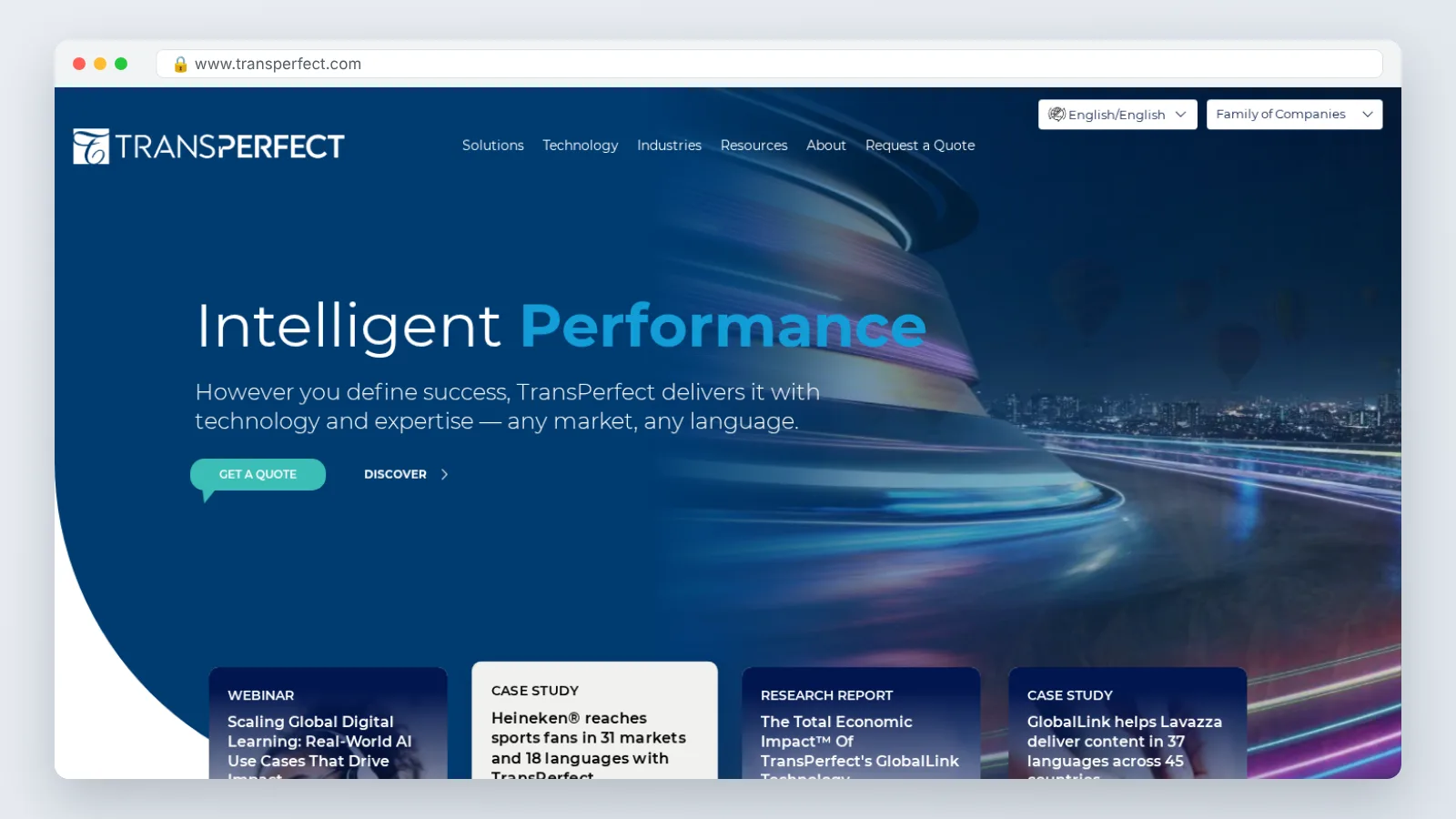
TransPerfect is the enterprise option: contracted language services with account managers, statements of work, termbases and documented QA steps. Pricing is quoted, not published, which means your procurement team negotiates rate cards by content type rather than clicking a checkout button.
The value shows up on programs, not one-off files. Regulated Spanish content — pharmacovigilance reports, financial disclosures, litigation discovery — needs a glossary that survives staff turnover and an audit trail showing who translated and who reviewed each segment.
Expect a longer start. Scoping calls, security review, glossary build and a pilot batch typically precede real volume, so plan the onboarding weeks into your deadline rather than discovering them.
Ask for the named review step in writing. "Translation plus independent revision" and "translation plus spot check" are different products at different prices, and the difference is invisible on an invoice line that just says Spanish to English.
Best for: regulated industries and multi-department programs with recurring Spanish volume and an audit requirement.
Skip it if: you have one birth certificate and a two-week deadline — the contracting overhead outweighs the work.
Legal, medical and video: what actually changes the price
Five things move a Spanish-to-English quote, and none of them is word count alone.
- Certification. A signed statement of accuracy and competency adds a human signatory and legal exposure, which is priced in.
- Format. Scanned stamps, handwritten doctor’s notes and multi-column vital records cost more than clean digital text of the same length.
- Terminology risk. Dosage units, ICD codes and statutory citations require a reviewer who knows the domain, not just the language.
- Turnaround. Same-day work pulls a linguist off scheduled jobs and carries a surcharge at most vendors.
- Timed media. Video adds transcription, timecoding and reading-speed limits on top of translation.
Notarization is the most common overspend. According to Lehigh Valley Immigration Law, a certified translation filed with USCIS does not need to be notarized or apostilled — neither the regulation nor the Form I-485 instructions require it.
Jurisdiction matters here. That USCIS rule covers federal immigration benefit filings; individual state courts, county clerks and foreign consulates set their own requirements, and some do demand a sworn or notarized translator, so confirm with the receiving office before paying for extras.
Medical files: who signs off
Medical Spanish has no single federal rule equivalent to 8 CFR 103.2(b)(3), so the standard comes from whoever receives the file. A hospital records department, a research sponsor or an IRB usually asks for the same elements an immigration filing needs — a complete translation, a signed statement of accuracy, and the translator named along with their competency — plus evidence that someone with a clinical background reviewed the terminology.
That reviewer is the step buyers skip. Dosage units, abbreviations that vary between Spanish-speaking countries, drug names branded differently in Mexico and Spain, and diagnostic coding all fail quietly: the English reads fluently and says the wrong thing. Ask who performs the clinical review, what credential that person holds, and whether it is independent revision or a spot check. For research, ask the IRB what it wants on file before you order — consent forms are often held to a stricter back-translation standard than chart notes.
Video is where the unit shifts entirely. If your deliverable is a Spanish training video that has to ship in English rather than a caption file, a video platform can replace the subtitle vendor — AI Studios lists its Personal plan at $24 per month billed annually with 120 minutes of AI dubbing per month, and its paid plans cover text-to-speech in 150+ languages and accents.
This section is general information about documentation requirements, not legal or medical advice; check with your attorney or the receiving agency.
Which one fits you
| Your situation | Pick this |
|---|---|
| Filing a Spanish birth or marriage certificate with USCIS | A certified-document specialist like RushTranslate, with certification wording that names accuracy and competency |
| A Spanish discharge summary, chart note or consent form for a hospital or IRB | A provider that names a clinical reviewer in the statement of work and issues a signed certificate of accuracy — a contracted provider for programs, a certified-document specialist for one-offs |
| Recurring Spanish marketing, support or product copy | Gengo’s Advanced tier at $0.12 per word for anything customer-facing |
| A 12-minute Spanish interview needing English subtitles | Rev or another media vendor, checked against the $5–$8 per minute Spanish benchmark Vendr reports |
| Reading Spanish email, chat and news internally | DeepL Pro on a per-seat plan, with human post-editing before anything ships |
| Regulated, audited, multi-year Spanish volume | TransPerfect or a comparable contracted provider with a glossary and documented revision step |
| Monthly Spanish training video that must become spoken English | An AI dubbing platform priced per minute of runtime |
Run one test before you commit. Send the same Spanish source file to two vendors, ask both for a written quote in your unit — per word, per page or per minute — and compare the deliverable list, not the headline rate.
Check the certificate language yourself on any legal or immigration job. The signature, the competency statement and the completeness of the translation decide whether the filing holds, and no price tier substitutes for those three.
Frequently asked questions
Does a Spanish-to-English certified translation need to be notarized for USCIS?
No. Lehigh Valley Immigration Law reports that a certified translation filed with USCIS does not need to be notarized or apostilled, since neither the regulation nor the Form I-485 instructions require it. State courts and foreign consulates can set stricter rules, so confirm with the office receiving your documents.
How much does Spanish-to-English translation cost per word?
Published marketplace rates give you a floor: Gengo’s rates start at $0.06 per word for Standard and $0.12 per word for Advanced, the tier it recommends for formal business use. Certified vital records are usually priced per page instead, and enterprise contracts are quoted rather than published.
What does Spanish subtitling cost per minute of video?
Procurement data compiled by Vendr shows Spanish sits at the cheap end of subtitle work, with translation plus captioning typically running $5–$8 per minute versus $10–$12 for rarer languages. That is a category benchmark rather than any single vendor’s rate. Confirm whether a quote includes transcribing the Spanish audio and delivering an editable sidecar caption file.
Can I use machine translation for medical or immigration documents?
Not as the final deliverable. Under 8 CFR 103.2(b)(3), as summarized by CitizenPath, any Spanish document filed with USCIS needs a full English translation plus a signed certification of accuracy and translator competency, and machine output has no signatory. Hospitals and IRBs generally want a named human reviewer too. Use it for triage and internal reading only.
Are human translation rates going up?
Pressure exists on the labor side. Slator reported that the BLS median salary for interpreters and translators rose 5% in 2024 even as language-industry growth slowed. That may be one reason certified per-word pricing has not followed machine translation downward, but it is an inference rather than a measured trend — check each vendor’s current rate card before you budget.
Sources
- US Bureau of Labor Statistics’ Job Outlook for Translators and Interpreters Worsens — Slator
- USCIS Certified Translation Requirements for Immigration Documents — CitizenPath
- Translated Documents at Your AOS Interview: 2026 — Lehigh Valley Immigration Law
- Translation Pricing & Languages — Gengo Translation Rates
- Rev Software Pricing & Plans 2026: See Your Cost — Vendr
AI tools helped write this guide. The Spanish to English Editorial Team published it after checking every figure against the sources linked above.